

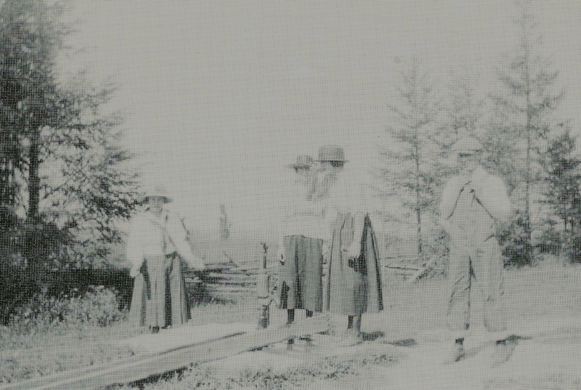
“In the early days, water wasn’t wasted in the house, because it was pulled out of the wells with buckets. The cattle went to the creek to get their water. Next a pitcher pump was used.” Esther Stucki Photo shows pitcher pump on the Stucki farm.
The wells were hand dug in those early days. Later when they did get a faucet in the house, the water had to be heated on the wood stove. By 1922 they had full plumbing, but that did not solve the water situation. Walter dug several wells. Often in the late summer or fall they would hear someone say that their well had run dry. The water shortage sometimes lasted until January. Esther Stucki
1927 McKinley School Water—Not Too Good
The school now had a water pump and well in front and was “Never worth a darn. You couldn’t drink the water.” Richard Scruggs, grandson of George Foege
The water pump in front is not drinkable water—not worth much. Note by teacher
There were three or four stalls for horses in back because some of the kids rode to school. There was also a privy.

Marianne got sick as a first grader, and an 8th grader took her home on the pony she had ridden to school and tied up in back for the day. Conversation with Marianne Krautscheid Hemstreet, at McKinley dedication of new wing, April 16, 2009 (Judy Taccogna)
Electricity
McKinley had electricity in about 1930.
As the years rolled on, McKinley School needed more room and improvements.